Scientific Schools
Scientific School of N.V. Lysenko
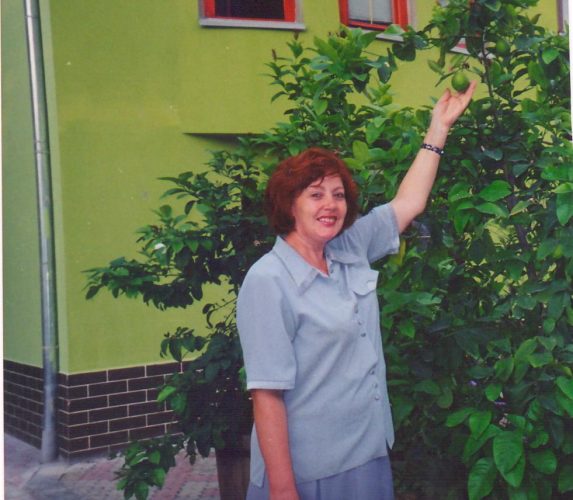
The scientific school of Doctor of Pedagogical Sciences, Professor Nelli Vasylivna Lysenko, was established in 1998 through active collaboration with Academician Myroslav Hnatovych Stelmakhovych. While heading the Scientific and Methodological Center of the Academy of Pedagogical Sciences of Ukraine and Vasyl Stefanyk Precarpathian National University, “Ukrainian Ethnopedagogy and Folklore Studies”, M. Stelmakhovych initiated new directions in research activities focused on fundamental issues of study.
Accordingly, the scientific problem presented by N. Lysenko following the defense of her doctoral dissertation in Pedagogical Sciences – “Ethno-Educational Space of Contemporary Educational Institutions in the Context of Globalization: Current State and Prospects” – implied a profound renewal of the methodological principles (1996) of the theory and methodology of ecological education for growing generations, based on the interdependence of the components of this process within the system “educator–child–parents–society” in the context of ethno-ecological approaches. This encompassed all stages from preschool institutions (ZDO) to postgraduate teacher education and parental lifelong learning programs.
It also included the adjustment of the worldview orientation of methodological disciplines in the professional training of future educators, focusing on the ecological integration of various types of children’s activities in the educational space of the Ukrainian national preschool system. Furthermore, it involved modeling a didactic and developmental environment in preschools and primary schools (ZDO and ZSH I level), promoting eco-purposeful activities among children according to their understanding of cause-and-effect processes in living and non-living nature, considering their perception characteristics, emotional development, and achieved level of intellectual development.
Strategic Directions of Research
The ecological potential of the educational process across all levels of education is becoming increasingly relevant, given the need for a comprehensive restructuring based on a system of scientific views on humans and their place in the natural world, rather than solely in social relations. Accordingly, it is necessary to rely on the multi-generational experience of human interaction with the natural environment along two fundamental priorities:
- a) the domination of humans over nature, or
b) the recognition and affirmation of oneself as an integral part of nature.
The principle of ecological holism, aligned with the second priority, implies not only the use of nature’s resources as freely available and accessible for exploitation but also a deep immersion into the roots of natural resource use that were characteristic of our ancestors over the centuries. These practices did not pose threats of global ecological disturbances to the atmosphere, soils, plants, animals, and humans in various parts of the world, especially within the Ukrainian territories.
Reviving the ethnoculture of natural resource use involves a systematic organization of constructive ideas and scientifically grounded approaches, taking into account traditions, spiritual needs, and ethnic characteristics.
Based on the analysis of general trends in ecological and natural science education for children, as well as the professional training of preschool educators for its implementation, a number of the most important strategic directions have been identified for integrating the ethno-ecological potential of knowledge from the deep cultural heritage of Ukrainians into the content of this process.
The accumulated experience of harmonious coexistence between humans and nature, as one of the vital universal laws, enables the implementation of ecological and natural science education in all its multifaceted dimensions, with its inherent practical orientation, as well as the multifunctionality of factors ensuring the comprehensive development and upbringing of the individual.
Author’s Concept of Ecological and Natural Science Education for Children Aged 3–6
The priority is the recognition of humanistic and ecological values in real educational practice, where the algorithm of interaction with the natural environment is based on acknowledging each child as the highest value:
- Respect for the child and their spiritual world, recognizing their needs, inclinations, and abilities;
- Formation of each child as a unique and irreplaceable individual;
- Affirmation of each child as the subject of their own being and activity;
- Encouraging the unconditional recognition by each child of universal humanistic values (kindness, mercy, justice, conscience, compassion, etc.);
- Guiding each child to form humanistic ideals based on universal and national values, as criteria for assessing the child’s own values as part of the Universe;
- Inspiring each child toward benevolent activity, accompanied by tireless work on self-improvement and self-realization.
Ecological and natural science education from the preschool age ensures the formation of the foundations of civic and patriotic feelings as universal human values—categories grounded in belonging to a particular ethnic group (ethnoecology), whose consciousness is embodied in folk creativity. Accordingly:
- The foundation of children’s ethno-ecological education is the experience of the ethnic group, permeated with a humane attitude toward the natural environment;
- Ethno-ecological education ensures the successful formation of national consciousness and patriotic feelings while preventing spiritual deformity;
- The objectives of ethno-ecological education are successfully achieved through Ukrainian folk literature, customs, traditional crafts and industries, participation in traditional folk theatrical performances (such as nativity plays, spring games), folk games, and entertainments;
- Ethno-ecological education promotes mastering the skills of folk culture in natural resource use to protect and preserve human life and health.
Humanistic and Ethno-Ecological Approaches in Ecological and Natural Science Education
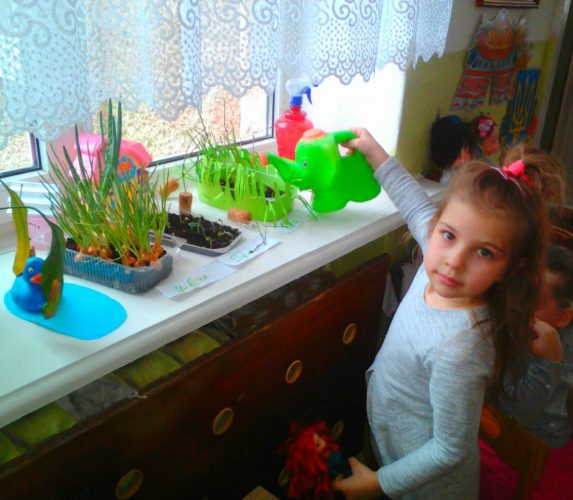
The humanistic and ethno-ecological approaches significantly enrich the scope of ecological and natural science education and enable the design of a “Green Preschool Environment” in typical urban kindergartens across Ukraine.
The implementation pathways involve seven vectors of program support, presented in the author’s educational technologies, particularly in the books: “Treasury”, “Fly in, Storks”, “My Native Land”, “ECO-EYE”: A – Modeling the didactic-developmental process in kindergartens to implement the program; B – Ecological program for children’s nutrition; C – Eco-friendly activities of the pedagogical staff in kindergartens; D – Eco-friendly cooperation with parents of kindergarten children; E – Eco-friendly collaboration with medical and psychological consulting centers; K – Eco-friendly collaboration with public nature conservation organizations (societies); L – Experimental project of the “Green Preschool Environment” program.
Professional and pedagogical training of future preschool educators in ecological and natural science education holds a central place in the author’s concept. Its foundational basis is grounded in the principles of:
- ensuring the cognitive activity of each child;
- positive motivation for practical interaction with the natural world;
- involvement of children in various activities that develop analytical and synthetic skills, stimulate observation, curiosity, and ingenuity;
- the activating influence of the pedagogical process in kindergartens and cooperation with parents in the context of ecological and natural science education.
The organization of professional training for future preschool educators occupies a key position among the other directions of the author’s school. Its central concept lies in understanding ecological-pedagogical culture as an integrated phenomenon encompassing the most important knowledge about humans and their life on Earth, unifying this knowledge into a single, logically complete whole. It results from mastering humanity’s historical experience in natural science education and includes professional skills and abilities in ecological education of preschoolers, aimed at forming the foundations of their ecological culture through ethno-ecology.
Conceptual Provisions in the Pedagogical Process of Higher Education Institutions
The conceptual provisions have been implemented in the actual pedagogical process of higher education institutions. The formation of the ecological-pedagogical culture of future preschool educators and the corresponding organization of ecological and natural science education for children of preschool age can be realized under the following conditions:
- Integration of knowledge from applied, general, and social ecology and pedagogy, along with its specific methodologies, as the foundation of the ecological-pedagogical culture of a specialist;
- Unity of functioning of all structural components of the ecological-pedagogical culture;
- Influence on the intellectual, emotional-sensory, and volitional-active spheres of the personality in their dynamic development;
- Selection of effective methods and means for systematic and consistent functioning of the educator’s ecological-pedagogical culture in the process of ecological and natural science education of children;
- Enhancement and updating of ecological knowledge within the system of self-preparation and self-education of both educators and parents.
The developed and implemented provisions of the concept of ecological-pedagogical training for students, the model of their ecological-pedagogical culture created on this basis as a factor of professional readiness for ecological and natural science education of children, as well as the theoretical foundations and experimental materials, have been incorporated into the content of professional training for future preschool educators in higher education institutions in Ukraine.
Scientific School of N.V. Lysenko – Academic Achievements and Graduates
Under the guidance of N.V. Lysenko, 34 PhD dissertations have been successfully defended by postgraduate students and 3 doctoral dissertations are currently being prepared for defense during the activity of the scientific school.
Today, graduates of N.V. Lysenko’s scientific school hold prominent positions, including: Heads of Departments: M. Oliynyk – Department of Pedagogy and Psychology of Preschool Education T. Palahniuk – Department of Physical Education for Natural Science Faculties Deputy Deans: M. Komisaryk – Faculty of Pedagogy, Psychology, and Social Work at Chernivtsi National University named after Yuriy Fedkovych, Leading Specialists at Institutes of Postgraduate Pedagogical Education (OIPPO): H. Reho – Zakarpattia (Uzhhorod), N. Klimkina – Khmelnytskyi, Associate Professors in Preschool Education Departments: Ivano-Frankivsk National University named after Vasyl Stefanyk (Department of Theory and Methods of Preschool and Special Education) – H. Boryn, N. Kravets, N. Lazarovych, L. Matsuk, S. Chupakhina, Lutsk Pedagogical College (Department of Psychological and Pedagogical Disciplines) – A. Bubin, Drohobych State Pedagogical University named after I. Franko (Department of General Pedagogy and Preschool Education) – Yu. Kalichak, Rivne International Economic and Humanities University named after Acad. S. Demianchuk (Department of Pedagogy) – T. Dzhaman, Khmelnytskyi Humanitarian-Pedagogical Academy (Department of Preschool Pedagogy, Psychology, and Professional Methods) – V. Rozhon, N. Frolenkova, Doctoral Students at Ivano-Frankivsk National University named after Vasyl Stefanyk: V. Stynska, A. Dobrovolska, O. Khobzei.
These graduates continue the tradition of N.V. Lysenko’s scientific school, contributing to the development of preschool education and ecological-pedagogical research in Ukraine.
The scientific output of N.V. Lysenko’s Authorial School comprises approximately 450 scientific works, including 8 monographs, 14 textbooks, 6 methodological manuals, 2 programs for preschools (DNZ), and 4 programs for higher education institutions (VNZ) in Ukraine.
The scientific school of N.V. Lysenko actively collaborates with universities in the Republic of Poland (Częstochowa, Szczecin, Słupsk), Romania (Suceava), Hungary (Debrecen, Hajdúböszörmény), and other countries.
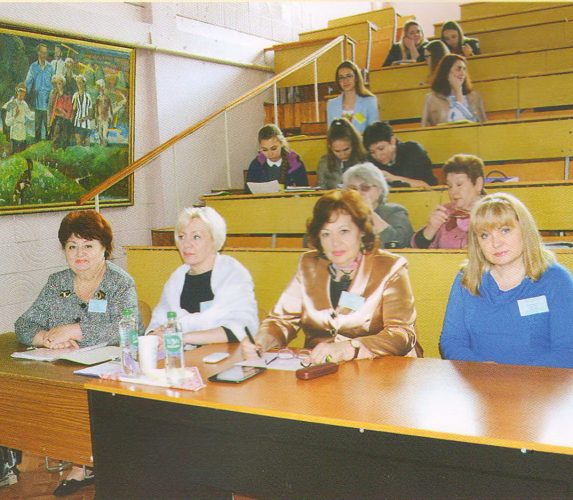
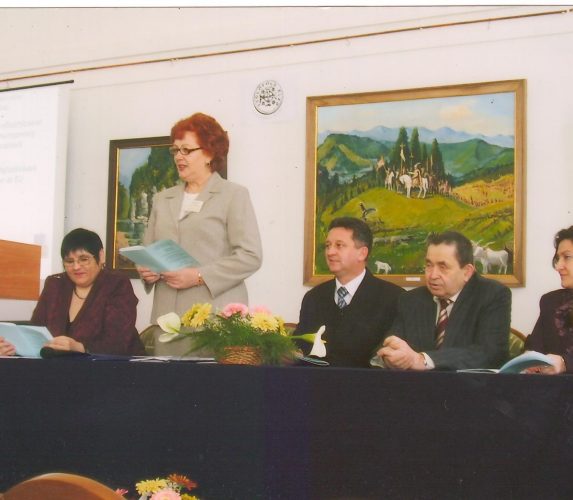
During the activity of N.V. Lysenko’s scientific school, the following events were held: 4 International, 2 All-Ukrainian scientific-practical conferences, 1 International and 1 All-Ukrainian scientific-practical seminar, 1 International scientific-practical forum, 1 International scientific-practical symposium, and other scholarly events.
Among the achievements of the school, the contributions of masters and doctoral students of the Pomeranian Academy (Słupsk, Republic of Poland) occupy a prominent place.